That’s what yesterday evening was like for me.
I love good wine, and I love a good bargain. Those two things sometimes coexist at the Grocery Outlet (a surplus retailer with 130 stores in 6 western states offering discounted prices on everything from toothbrushes to lobster tails).
The wine section at the Grocery Outlet is a bit like going to Vegas. Sometimes you toss in a few coins and come out with a lovely little gem of Italian Sangiovese with just the right notes of strawberry and oak.
Other times you check the label to see if you accidentally purchased oven cleaner.
The gamble is worth it, since most wines are under $10, with plenty of bargains to be found in the $2.99-$3.99 range.

A few times a year, they offer 20% off all their wines. Cheapskate wine snobs look forward to these events because if we can just figure out which wines are the real gems, we can buy entire cases for pennies on the dollar.
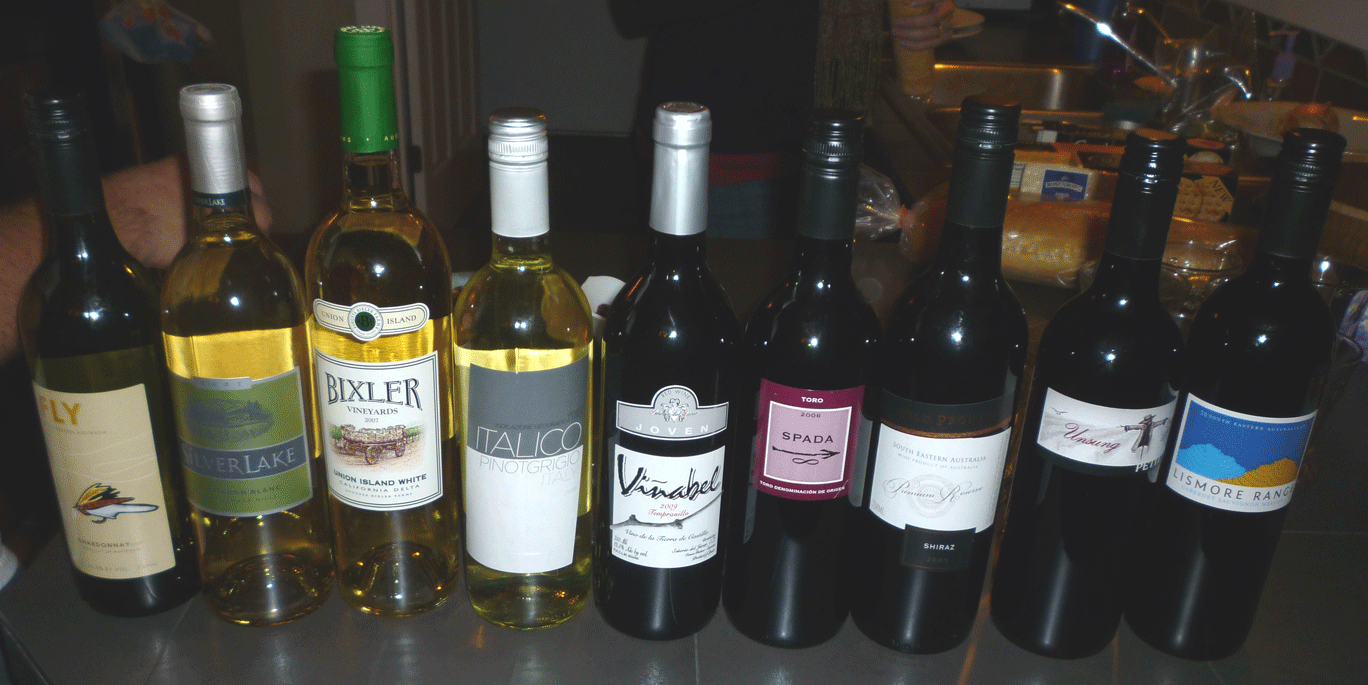
This was the thought behind a dinner party at a friend’s house last night. Seven of us gathered with nine bottles of recently purchased Grocery Outlet wine and a plan to find the best ones in the bunch.
We intended to determine the best bargains and race back at 7 a.m. the next morning to fight the other cheapskate wine snobs for the good stuff.
But here’s the funny thing – none of us agreed on which wine was “the good stuff.”
I was fond of the 2008 Unsung Heroes Petite Verdot from South Australia. My friend Larie fell hard for a quirky little white blend from California with a ghetto label. Pythagoras – who isn’t generally a wine fan – loved an Italian Pinot Grigio that didn’t have a word of English printed on the bottle.
And while the two Spanish reds I expected to adore fell flat in my opinion, they drew great praise from several members of the group.
 It reminds me of an analogy someone shared when I first started submitting my writing to editors and agents.
“Don’t think of it as the editor rejecting you because it’s bad,” she urged. “Think of it more like you’re around a big dinner table with a bunch of editors, and the one next to you passes on your green bean casserole because she doesn’t particularly care for green beans, but the editor at the other end of the table happens to love them.”

It put things into perspective for me. Yes, there are always things we can do to grow and improve as writers, but rejection doesn’t always mean you suck. Sometimes, it just means you offered the editor a spicy Shiraz when she happened to want a citrusy Sauvignon Blanc.
We all have different tastes – even editors and agents. This is a subjective business. The trick is to keep that in mind, and remember that somewhere out there is the person who will love every last drop of whatever you’re pouring.
On that note, I must go practice my kung-fu moves. If the other cheapskate wine snobs think they’re getting their hands on that Petit Verdot, they’ve got another think coming.